Digital Marketing for Small Business: Use AI to Turn Clicks Into Customers
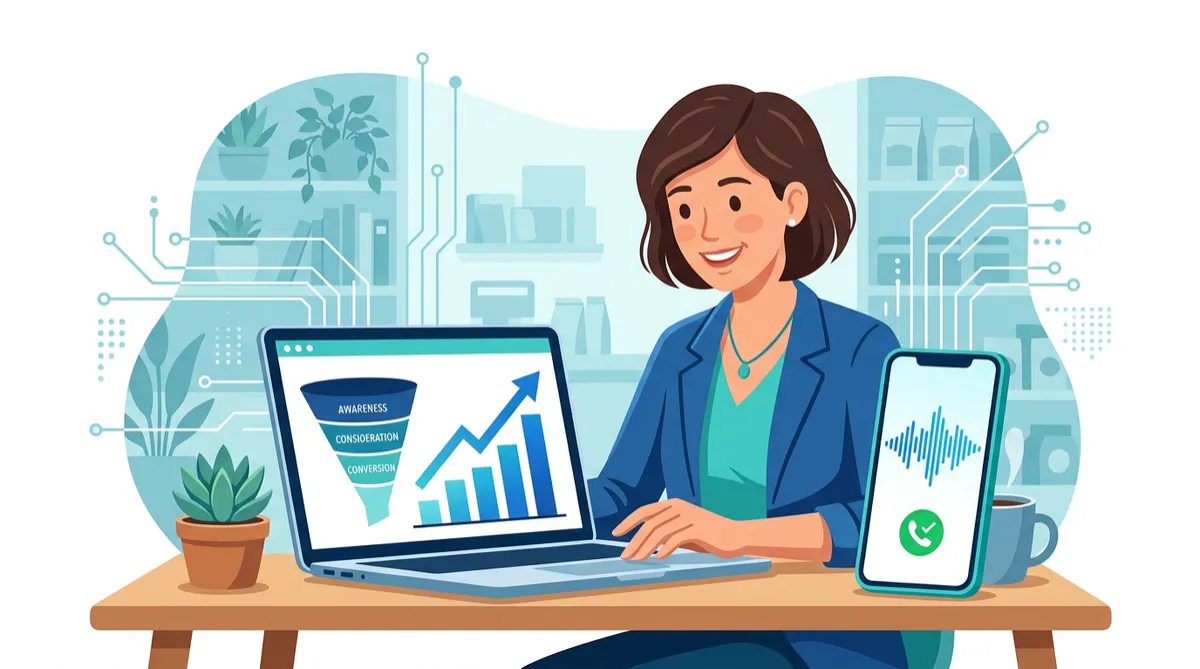
Most small business owners do not have a traffic problem alone. They have a conversion problem. Ads, social posts, search listings and referrals can all bring people to your door, but the money is made in what happens next: how quickly you respond, how clearly you follow up, and whether every inquiry ends up in a system that remembers it. This guide shows how to connect your digital marketing to AI lead generation, Voice AI and a CRM so your marketing effort turns into customers and sustainable money for your small business.
Digital marketing only pays when leads are handled well
It is easy to measure clicks, impressions and followers. Those numbers feel productive, yet none of them pay your bills. A lead who calls after seeing your ad and reaches voicemail is a cost, not a result. A web form that is answered two days later is often a lost sale, because the prospect has usually contacted two or three other providers by then.
The practical goal of digital marketing for a small business is therefore simple: attract the right people, respond fast, and keep every conversation moving until it becomes a booked job, an appointment or a sale. Everything else is a means to that end.
Step 1: Build a focused digital marketing foundation
Before adding automation, make sure the basics are working. You do not need to be everywhere. You need to be visible where your customers already look.
- Claim and complete your Google Business Profile. Accurate hours, services, photos and a steady flow of reviews make local searches work harder for you.
- Give each service its own page. A clear page for each offer, with a plain-language description, pricing guidance where possible and one obvious next step, helps both visitors and search engines.
- Pick one or two channels and do them consistently. For many local businesses that means search plus either social media or email. Consistency beats volume.
- Make contacting you effortless. A visible phone number, a short form and a booking option remove friction at the moment of highest interest.
Step 2: Use AI lead generation to find and qualify the right prospects
AI lead generation means using AI-assisted tools to attract, capture and sort inquiries so your time goes to the people most likely to buy. Used carefully, it supports your judgment rather than replacing it. Three practical applications stand out:
Capture every inquiry automatically
Connect your forms, chat, text messages and call tracking so each new inquiry is created as a contact in one place. Nothing should depend on someone remembering to copy details from an email into a spreadsheet.
Ask qualifying questions up front
Short intake questions such as what the person needs, when they need it and how they prefer to be contacted let you prioritize. An urgent request can be routed to you immediately, while a general question can receive an automatic helpful reply and a scheduled follow-up.
Personalize at scale
AI can help draft follow-up messages, suggest replies and summarize earlier conversations. Always review messages that carry your name and your promises, but let automation handle the repetitive first draft.
Step 3: Use Voice AI so you have never missed a call
For service businesses in particular, the phone is still where the most valuable leads show up. Callers are often ready to book, and they rarely leave a second message. Voice AI can answer inbound calls when you are on a job, with a customer or after hours, greet the caller, ask a few questions, answer common ones and schedule an appointment or pass along an accurate summary.
The aim is a business where it can honestly be said: never missed a call. A few tips make this work well:
- Write down your most common questions. Hours, service areas, pricing ranges and how booking works cover a large share of calls.
- Define when a human takes over. Emergencies, complaints and complex quotes should be escalated to you or a team member quickly.
- Send every call into your CRM. The summary, caller details and next step should be saved to the contact record automatically.
- Review calls regularly. Listening to a handful each week shows you what customers actually ask and where your marketing messages need to be clearer.
Step 4: Let your CRM turn marketing into a repeatable system
A CRM is the place where digital marketing, lead generation and sales finally meet. It records where each lead came from, what they asked for, what was said, and what happens next. That visibility is what allows you to spend marketing money with confidence.
Start with a simple pipeline such as new lead, contacted, appointment booked, quote sent, won and lost. Then add a few automations:
- Instant response: a text or email goes out within minutes of any form submission or missed call.
- Follow-up reminders: every open opportunity has an owner and a due date for its next step.
- Appointment reminders: automatic confirmations and reminders reduce no-shows.
- Review requests: after a completed job, a polite message asks happy customers for a review, which strengthens your local visibility.
- Re-engagement: past customers and quiet leads receive a helpful check-in on a sensible schedule.
AI automation tips for small business owners
Automation works best when it is introduced gradually. These tips help you gain the benefits without losing the personal touch that small businesses are known for.
- Automate one process at a time. Begin with the step where leads are most often lost, usually the first response.
- Keep your voice. Write templates the way you speak to customers, and avoid long, generic messages.
- Measure what matters. Track response time, appointments booked, quotes sent and sales won, not only traffic.
- Be transparent. Let people know when they are speaking with an automated assistant, and make it easy to reach a person.
- Protect customer data. Collect only what you need, respect opt-outs and follow the messaging rules that apply to your business.
- Review monthly. Look at which campaigns produce booked work and move your budget toward them.
How this helps with making money for small business
Sustainable making money for small business growth rarely comes from one big tactic. It comes from many small improvements that compound: more of your inquiries answered, more of your leads followed up, more of your quotes revisited, and more of your happy customers returning or referring others. When digital marketing feeds a CRM, and AI lead generation and Voice AI handle the routine work, you recover revenue that was previously slipping away and free up your own time for the work only you can do.
Results will vary with your industry, market and offer, so treat each change as a test. Begin small, watch the numbers, and keep what works.
A simple 30-day action plan
- Week 1: Update your Google Business Profile and service pages. Choose your two main marketing channels.
- Week 2: Centralize every inquiry source into your CRM and set up an instant response for new leads.
- Week 3: Set up Voice AI for after-hours and busy-time calls, with clear rules for escalation.
- Week 4: Add reminders, review requests and a re-engagement message. Review your numbers and adjust.
Ready to stop losing leads?
You have already invested in getting people to notice your business. Make sure every call, form and message is answered, tracked and followed up. MAJ.COM AI Business Automation helps small business owners bring AI lead generation, Voice AI and a CRM together in one system, so that you have never missed a call and every lead has a clear next step. Contact MAJ.COM today to talk about automating your lead follow-up and turning more of your digital marketing into paying customers.